

By: Dheeraj Gupta Koona - Senior Sustainability Consultant, KSA
Date Published: February 13, 2026

As cities accelerate toward net-zero targets, the role of renewable energy in the built environment is evolving. The challenge is no longer limited to how much clean energy buildings can generate but increasingly concerns how renewable technologies integrate with architectural design, cultural identity, and urban character.
Global institutions such as the International Energy Agency (IEA) have repeatedly emphasized that buildings must play a central role in achieving climate targets, particularly through envelope-level interventions rather than isolated rooftop solutions.
(IEA – Buildings Sector: https://www.iea.org/topics/buildings).
In dense cities, heritage districts, and high-visibility developments, conventional photovoltaic panels often face resistance. Their standardized dark appearance can conflict with carefully curated façades, planning guidelines, and the visual language of landmark architecture. As a result, large portions of the building envelope—particularly façades—remain underutilized for renewable energy generation, despite their significant solar exposure.
Colored photovoltaics (PV) have emerged as a response to this challenge. By enabling solar modules to adopt a range of colors, textures, and finishes, colored PV allows renewable energy systems to be treated as intentional architectural elements rather than technical add-ons—supporting what the European Commission increasingly refers to as design-integrated energy systems
(EU BIPV Research: https://energy.ec.europa.eu/topics/energy-efficiency/energy-efficient-buildings_en).
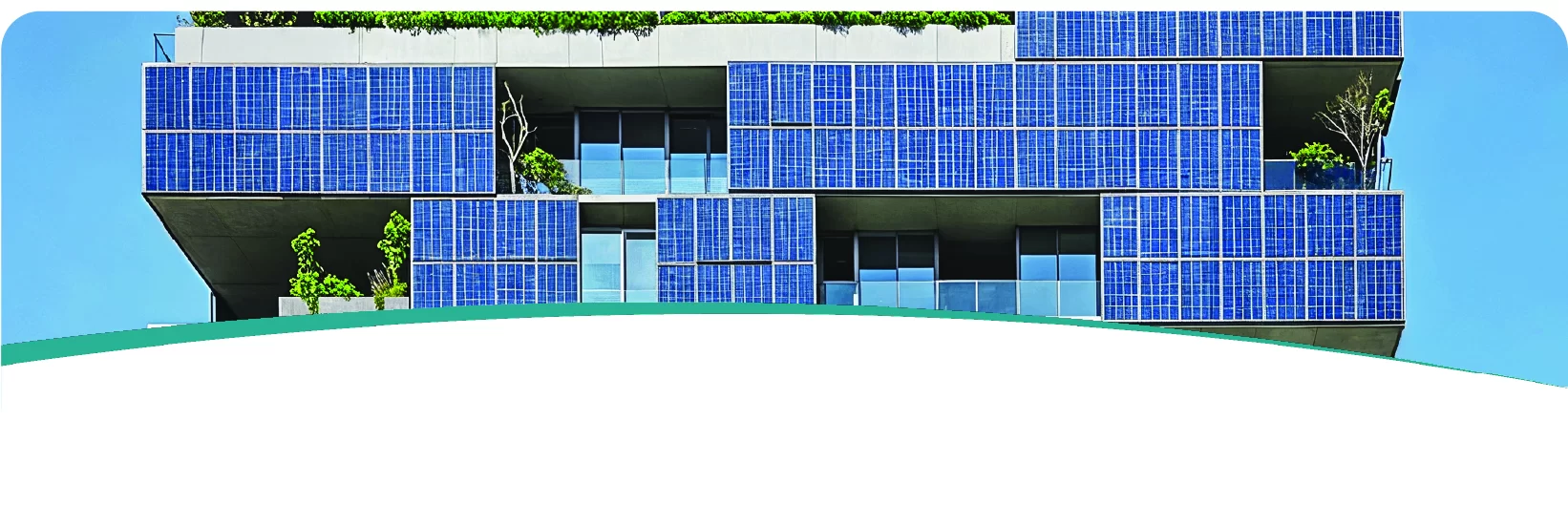
Building-integrated photovoltaics represent a shift from rooftop-mounted systems toward deeper integration within the building envelope. Façades, skylights, balustrades, shading devices,
and cladding systems are increasingly expected to perform multiple functions, including energy generation, thermal control, and daylight modulation.
According to the IEA PVPS Task 15 on BIPV, this approach allows PV systems to serve multiple roleselectricity generation, weather protection, thermal modulation, and architectural expression—while reducing redundancy in materials
Despite these advantages, early BIPV adoption remained limited due to visual rigidity and limited design flexibility. Most systems offered little variation beyond dark blue or black modules, reinforcing the perception that solar technologies were incompatible with refined architecture.
Colored PV extends the BIPV concept by addressing one of its most persistent barriers: visual uniformity. Conventional PV modules are typically black or dark blue, which may conflict with architectural intent, material palettes, or planning regulations. Colored PV technologies allow solar elements to align with the architectural language of a building—particularly in projects where visual coherence is critical.
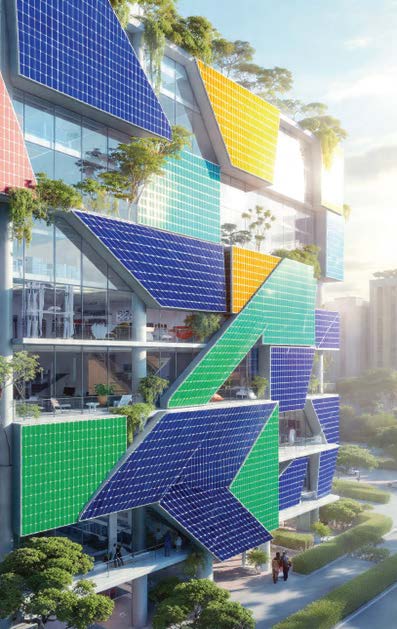
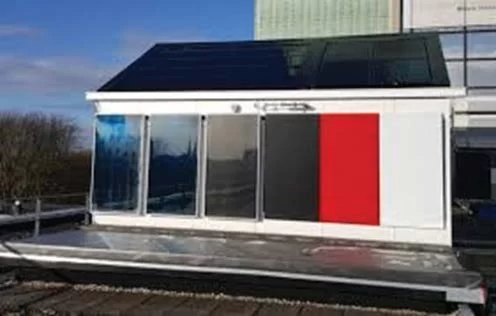
Introducing color into photovoltaic modules requires careful manipulation of light while preserving the core photovoltaic function. Several technological approaches have matured in recent years, supported by extensive laboratory and field research.
Spectrally selective coatings
These coatings reflect targeted wavelengths of visible light to produce color while allowing the remaining solar spectrum to reach the photovoltaic cells. Research published in Nature Energy and Progress in Photovoltaics demonstrates that optimized coatings can limit efficiency losses to single-digit percentages
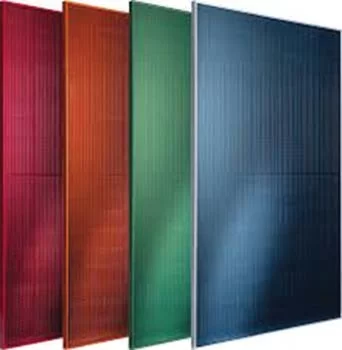
Nano-structured and textured glass surfaces
Micro- and nano-scale surface treatments scatter incoming light to create matte, stone-like, or metallic finishes. These technologies are widely documented in façade-integrated PV research due to their glare-reduction benefits, particularly in dense urban environments
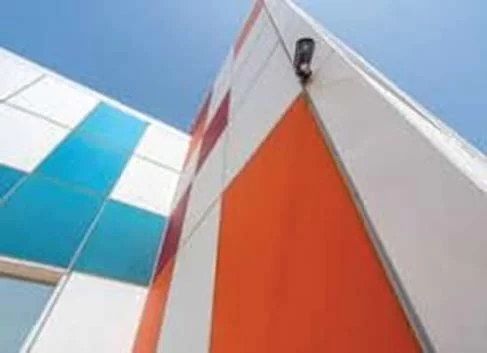
Laminated colored glass systems
In this approach, color is embedded within the glass laminate rather than applied directly to the solar cell. This allows the photovoltaic layer to remain optimized while the external appearance is controlled independently. Systems such as Kromatix™ have published long-term performance and durability data under real operating conditions
(Kromatix Technical Publications: https://www.swissinsolar.com/kromatix ).
While all colored PV technologies involve trade-offs, IRENA emphasizes that façade-based renewable generation should be evaluated based on usable surface area, lifecycle performance, and urban acceptance, not peak module efficiency alone
(IRENA – Innovation Landscape for Buildings: https://www.irena.org/Publications).
Colored photovoltaics have progressed from experimental concepts to proven architectural solutions. Adoption has been strongest in projects where design quality, public visibility, and planning sensitivity are paramount.
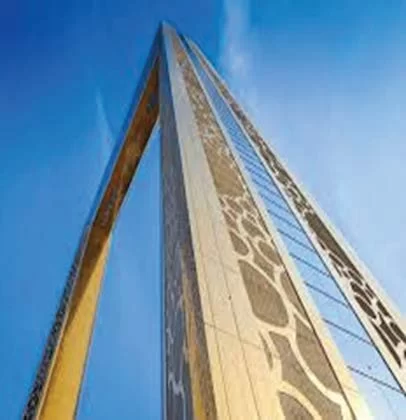
Dubai Frame, UAE
Context: Globally recognized urban landmark
Application: Integration of photovoltaic glass within envelope elements
Value: Demonstrates that renewable energy systems can be embedded into iconic civic architecture without visual disruption
(Dubai Municipality – https://www.dm.gov.ae/projects/dubai-frame/ )
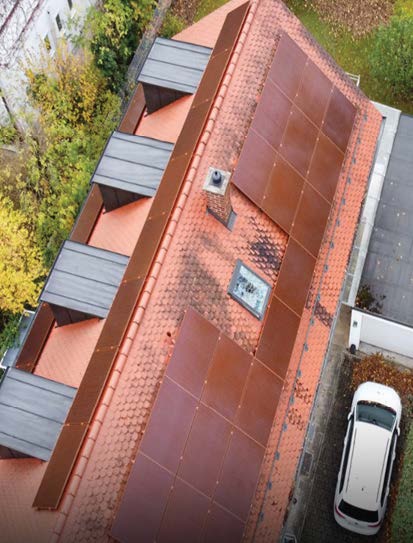
Historic District, Munich, Germany
Context: Conservation-controlled urban fabric
Application: Façade-integrated colored PV aligned with heritage guidelines
Value: Enabled on-site renewable generation while maintaining full compliance with conservation regulations
SwissTech Convention Center, Lausanne, Switzerland
Context: The SwissTech Convention Center is a landmark academic and public building located within the EPFL campus in Lausanne.
Application: Colored building-integrated photovoltaic (BIPV) panels were integrated directly into the building envelope, forming a key component of the façade system.
Value: The SwissTech Convention Center demonstrates how colored BIPV can function as both a primary architectural material and an active energy-generating system. The project provides documented evidence of long-term durability, visual consistency, and performance stability, reinforcing the viability of colored PV solutions in prominent civic and institutional buildings. It is frequently cited in European research and professional guidance as a benchmark for design-led photovoltaic integration.
(Source: Swiss BIPV Case Study – EPFL / SwissTech Convention Center: https://www.bipv.ch/images/esempi/altro/SwissTechConventionCenter/SwissTech_Convention_Centre_2016.pdf)
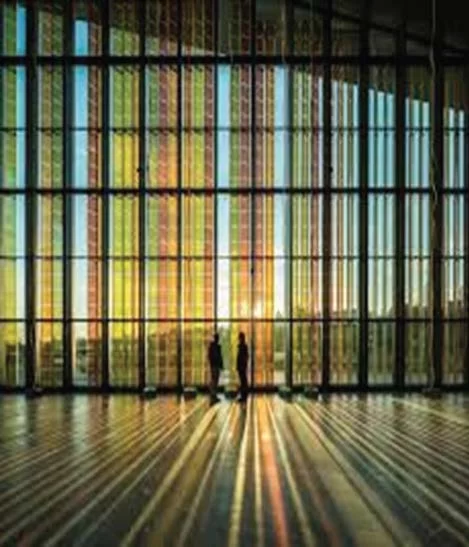
Red River College, Winnipeg, Canada
Context: Educational campus with sustainability mandate
Value: Combined renewable generation with pedagogical and architectural value
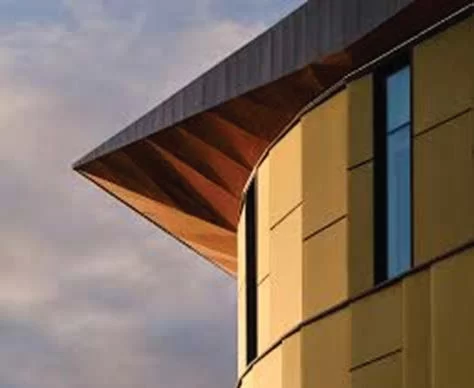
Kindergarten Building, Dubai, UAE
Context: Educational facility.
Application: Playful color-specific PV façade.
Value: Enhanced architectural identity and sustainability outcomes.
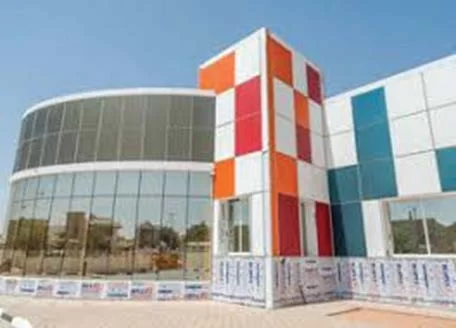
The Middle East presents a compelling context for colored PV adoption. Across the region, large-scale developments emphasize architectural identity, cultural narrative, and global visibility while pursuing ambitious net-zero targets.
Despite its potential, several factors continue to influence adoption:
At the same time, the opportunities are significant:
Colored photovoltaics represent an important evolution in renewable energy integration. By reconciling aesthetics with performance, colored PV enables buildings to contribute to decarbonization while reinforcing architectural identity.
As net-zero targets become standard practice, the success of renewable integration will increasingly depend on design acceptance as much as technical performance. Colored PV will not replace conventional solar installations, but it will unlock applications where visual integration is decisive—supporting a more inclusive and design-conscious transition toward sustainable urbanism.


Senior Sustainability Consultant
KSA
Dheeraj is a Senior Sustainability Consultant at AESG, with over 13 years of experience as a Building Science Engineer, specializing in sustainable design and climate action. He is a USGBC faculty, LEED SME and holds key sustainability credentials, including LEED AP, WELL AP, Envision SP, Parksmart Advisor, Activescore+Modescore AP, ISO 14064 GHG Lead Verifier/Validator and ISO 14001 Lead Auditor. His expertise spans sustainable engineering, energy conservation, and integrated building design.
He leverages a cross-functional background and a holistic approach to develop effective sustainability strategies for the built environment and guides clients in achieving their Sustainability goals and certifications.
For further information relating to specialist consultancy engineering services, feel free to contact us directly via info@aesg.com

ISO 27001:2022
ISO 9001:2015
ISO 14001:2015
ISO 45001:2018
601-608, The offices at Ibn Battuta Gate
Jebel Ali 1-Village
PO Box 2556
Dubai, United Arab Emirates
T / +971 (0) 4 432 6242
305 Mermaid House
2 Puddle Dock
London, EC4V 3DS
United Kingdom
T / +44 (0) 208 037 8762
Haibu Space, Abu Dhabi Mall
1st floor, Office 37
Tourist Club Area
Abu Dhabi, United Arab Emirates
T / +971 (0) 2 201 2527
9391 Wadi Al Thummamah
2444 Al Olaya District
PO Box 12214
Riyadh, Kingdom of Saudi Arabia
T / +966 (0) 112 278 288
111 Somerset Road
#08-10A, 111 Somerset
Singapore 238164
11th Floor, Office 1101
2 Long Street
Cape Town 8000
Western Cape, South Africa
T / +27 (0) 21 137 6444
8 Parramatta Square
49th Floor, Office 117
Parramatta, Sydney
New South Wales 2150
Australia
T / +61 (0) 2 8042 6817
32/F, 367 Collins Street
Melbourne, VIC 3000
Australia
T / +61 (0) 3 8612 7200
Floor 3
Office No. 8, Signature Square Building
Moustafa Kamel Axis
New Cairo 1
Egypt
T / +20 (0) 2 2344 1268
601-608, The offices at Ibn Battuta Gate
Jebel Ali 1-Village
PO Box 2556
Dubai, United Arab Emirates
T / +971 (0) 4 432 6242
305 Mermaid House
2 Puddle Dock
London, EC4V 3DS
United Kingdom
T / +44 (0) 208 037 8762
Haibu Space, Abu Dhabi Mall
1st floor, Office 37
Tourist Club Area
Abu Dhabi, United Arab Emirates
T / +971 (0) 2 201 2527
9391 Wadi Al Thummamah
2444 Al Olaya District
PO Box 12214
Riyadh, Kingdom of Saudi Arabia
T / +966 (0) 112 278 288
111 Somerset Road
#08-10A, 111 Somerset
Singapore 238164
11th Floor, Office 1101
2 Long Street
Cape Town 8000
Western Cape, South Africa
T / +27 (0) 21 137 6444
8 Parramatta Square
49th Floor, Office 117
Parramatta, Sydney
New South Wales 2150
Australia
T / +61 (0) 2 8042 6817
32/F, 367 Collins Street
Melbourne, VIC 3000
Australia
T / +61 (0) 3 8612 7200
Floor 3
Office No. 8, Signature Square Building
Moustafa Kamel Axis
New Cairo 1
Egypt
T / +20 (0) 2 2344 1268
Copyright 2026 | AESG | All Rights Reserved
